
Church translation case study
How Cape Vineyard Church serves every language in the room
Cape Vineyard Community Church in Cape Coral, Florida runs live translation at every service — Sunday mornings and Thursday's Dinner Church. No headsets, no interpreter booth, no app. Just a QR code in the lobby and the phones the congregation already carries.
The church
Cape Vineyard Community Church serves a Southwest Florida community where Spanish-speaking families are a core part of the congregation. Like a lot of churches in multilingual neighborhoods, they faced the familiar version of the problem: the sermon was preached in English, and part of the room was left to piece it together — or to depend on a family member whispering a translation all morning.
What they run today
Every service at Cape Vineyard is broadcast live through MyOpenDoor Translate:
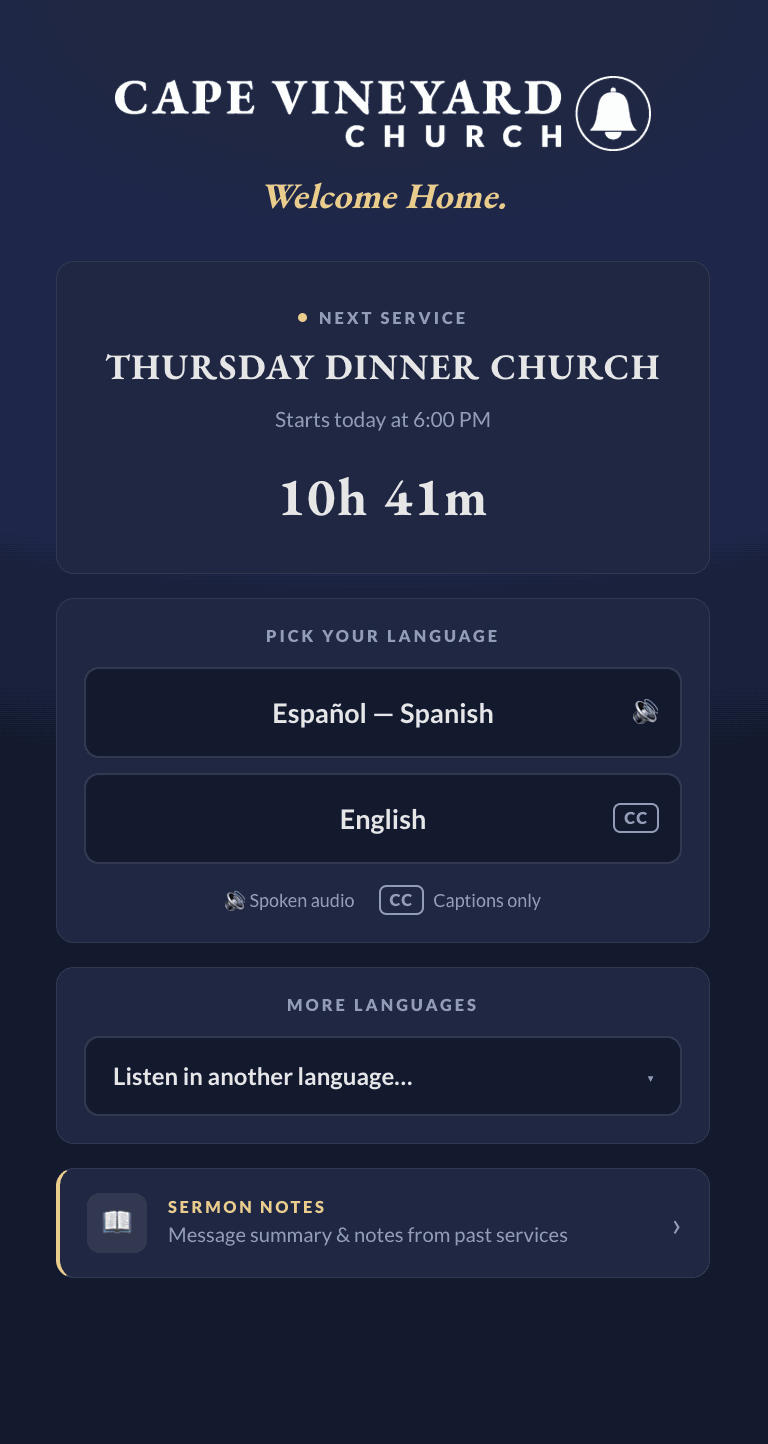
- A QR code in the lobby. Guests scan it with their phone camera — no app to install, no account to create. It opens the church's own listener page in the phone's browser.
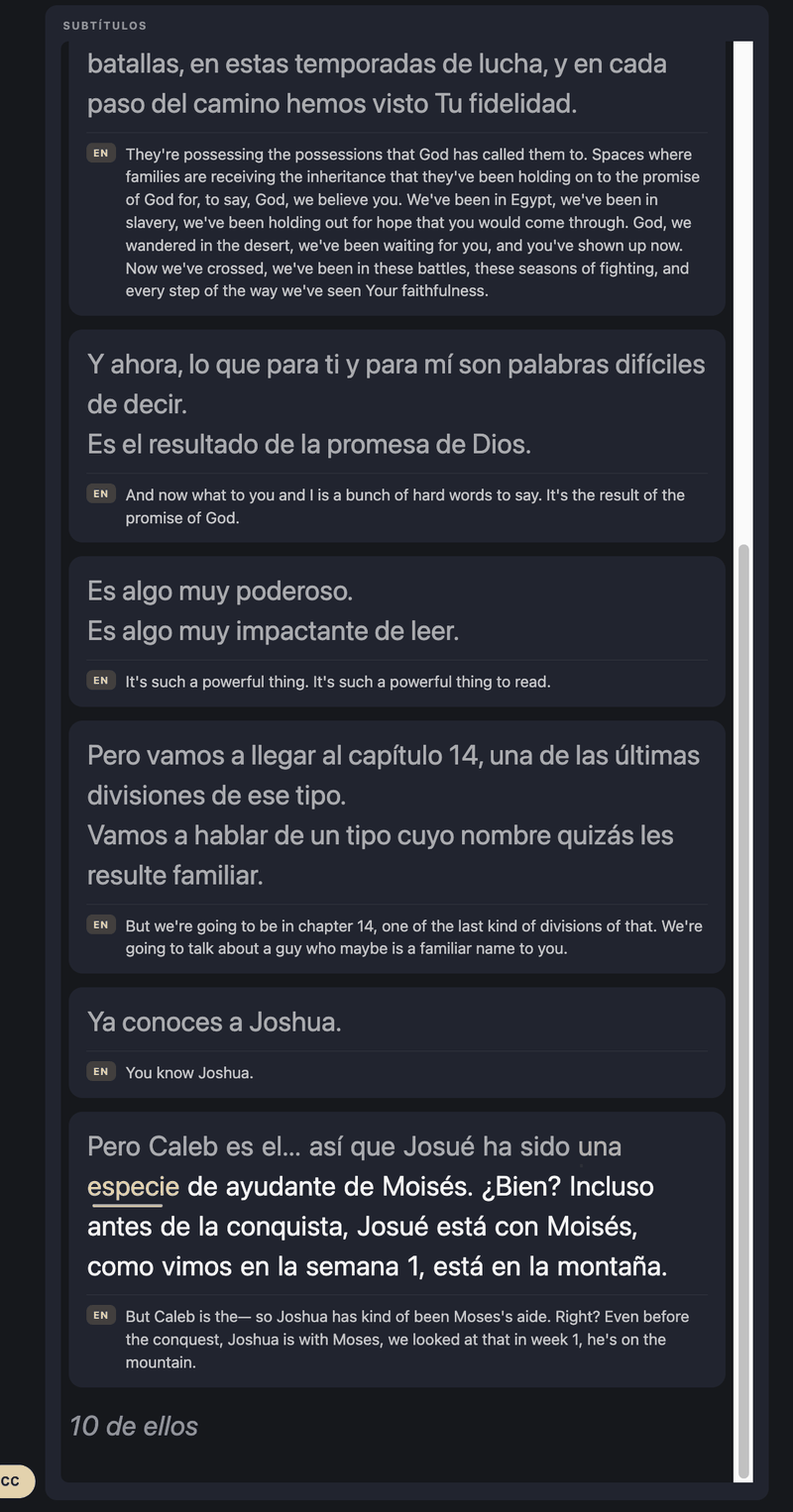
- Live captions in the guest's language. Complete sentences stream onto the phone as the pastor preaches, with the original English alongside.
- A natural spoken voice. Guests who prefer to listen tap once and hear the sermon in their language through their own earbuds, in a natural voice that tracks the preacher in real time.
- Every service, not special occasions. Sunday services and the Thursday evening Dinner Church both run live — translation is part of the room's normal welcome, not an event add-on.
The Sunday-morning flow
- The AV booth opens the broadcast console in a browser and goes live — same mic feed the sound board already carries.
- Guests scan the QR code in the lobby. Spanish speakers tap Español; anyone else picks from the full language list.
- As the pastor preaches, each phone shows the sermon in that guest's language — captions, natural spoken voice, or both.
- When the service ends, the booth ends the broadcast. Nothing to collect, nothing to sanitize, nothing to re-charge for next week.
Why it matters
The difference isn't a feature list — it's who gets to be fully in the room. A Spanish-speaking grandmother follows the same sermon at the same moment as the family beside her. Nobody sits in the "translated section," wears visible hardware, or waits for a summary afterward. The service is simply available in her language, on her own phone, from the moment she sits down.
"We're so happy and thrilled to be partnering with MyOpenDoor Translate. They've given us so much more than just being able to translate — they've allowed our listeners to engage more with what's going on in the service. Our Spanish listeners have commented so much about the change."
And because it's software rather than hardware, the language list isn't fixed. The same broadcast that serves Spanish serves 190+ caption languages and 60+ spoken voices — whoever walks in next is already covered.
What it took to set up
- Audio: the existing microphone feed — no new equipment purchased.
- The booth: a laptop with a web browser running the broadcast console.
- The congregation: a printed QR code in the lobby. That's the entire guest-facing rollout.
Could your church do this?
If Cape Vineyard's situation sounds like yours — an English-language service, a multilingual community, and no budget line for interpreters or headset hardware — the same setup applies. Start with the overview of MyOpenDoor Translate for churches, how live translation for church services works end to end, the practical walkthrough of how to translate a church service live, and transparent pricing (plans start at $149/month, every feature included, no hardware).
Frequently asked questions
What does Cape Vineyard use live translation for?
Every service — Sunday mornings and the Thursday evening Dinner Church. Guests scan a QR code in the lobby, pick their language on their own phone, and follow the whole service as live captions, a natural spoken voice, or both. Spanish-speaking members are a core audience.
Did the church have to buy translation equipment or headsets?
No. There are no headset receivers, no interpreter booth, and no app for guests to install. The congregation listens on the phones they already carry; the church runs the broadcast from a browser at the AV booth using the microphone feed it already has.
Do guests need to download an app?
No. The QR code opens a web page in the phone’s own browser. Guests tap their language and captions begin; those who want audio tap Listen and hear a natural voice in their language through their earbuds.
How many languages can a church offer this way?
One broadcast serves every language the plan includes, all at the same time. MyOpenDoor Translate draws from live captions in 190+ languages and natural spoken voice in 60+, and each plan sets how many run concurrently — 3 on Starter, 5 on Congregation, 7 on Multi-Site. At Cape Vineyard, Spanish is the most used, but every guest picks their own.
What does a setup like Cape Vineyard’s cost?
It’s a monthly software subscription, not hardware. Plans start at $149/month with every feature included — see the pricing page for the full breakdown, including annual discounts and the nonprofit discount.