
The best church translation apps in 2026
If you searched for a church translation app, here’s the first thing worth knowing: the best options in 2026 aren’t apps your guests install. Every dedicated service on this list runs in the phone’s browser — a guest scans a QR code, picks a language, and follows the service live. That matters on a Sunday morning, because a first-time visitor will scan a code; they will not stand in the lobby downloading an app. Below are the five options churches actually choose between, with every fact drawn from each provider’s own published pages as of July 2026.
One honest disclosure before the list: MyOpenDoor Translate is our product. We’ve put it first because this is our site — but every claim about the other services comes from their own websites, quoted as published, and we tell you exactly where each one is strong. For the row-by-row version, see the full feature comparison.
1. MyOpenDoor Translate — built for the whole church service
Best for: churches that want translation built around preaching — before, during, and after the service.
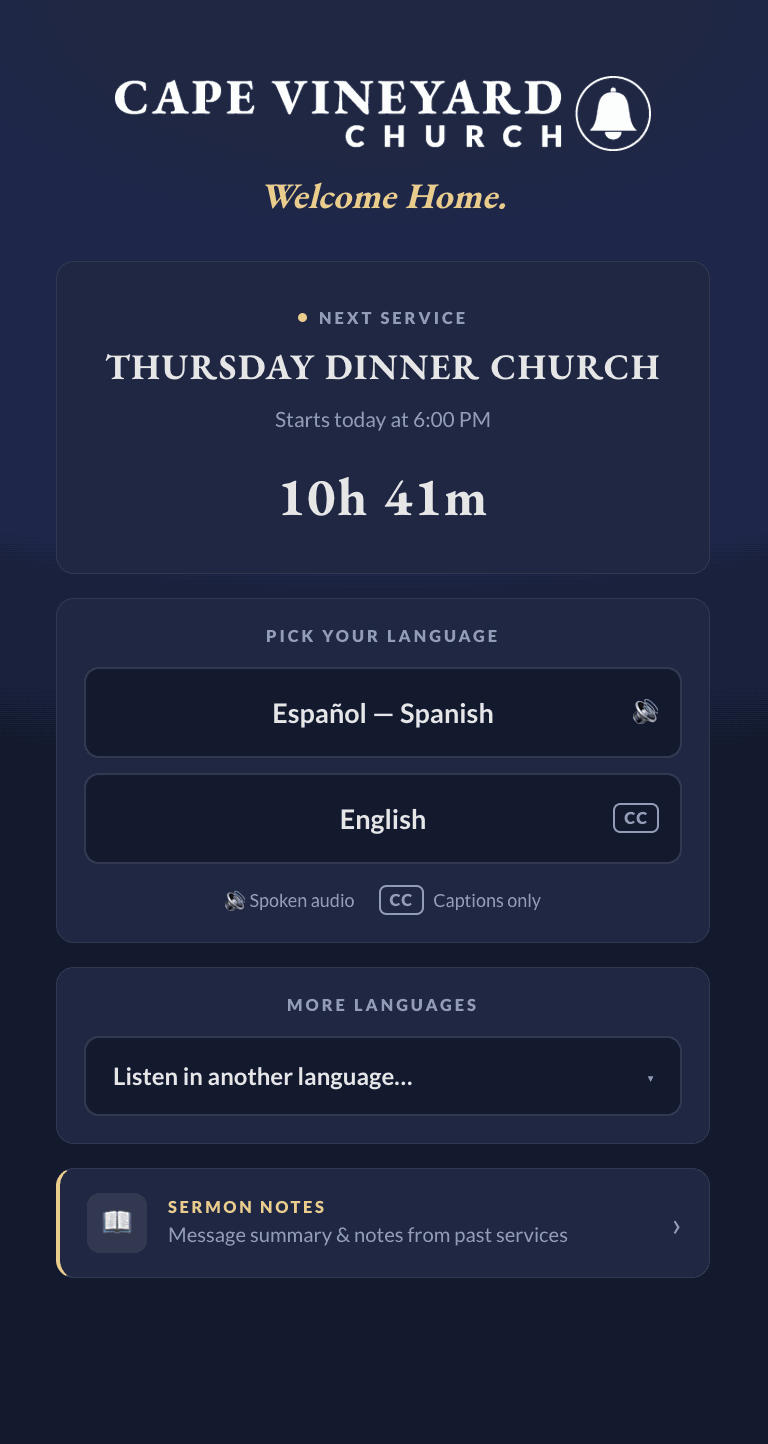
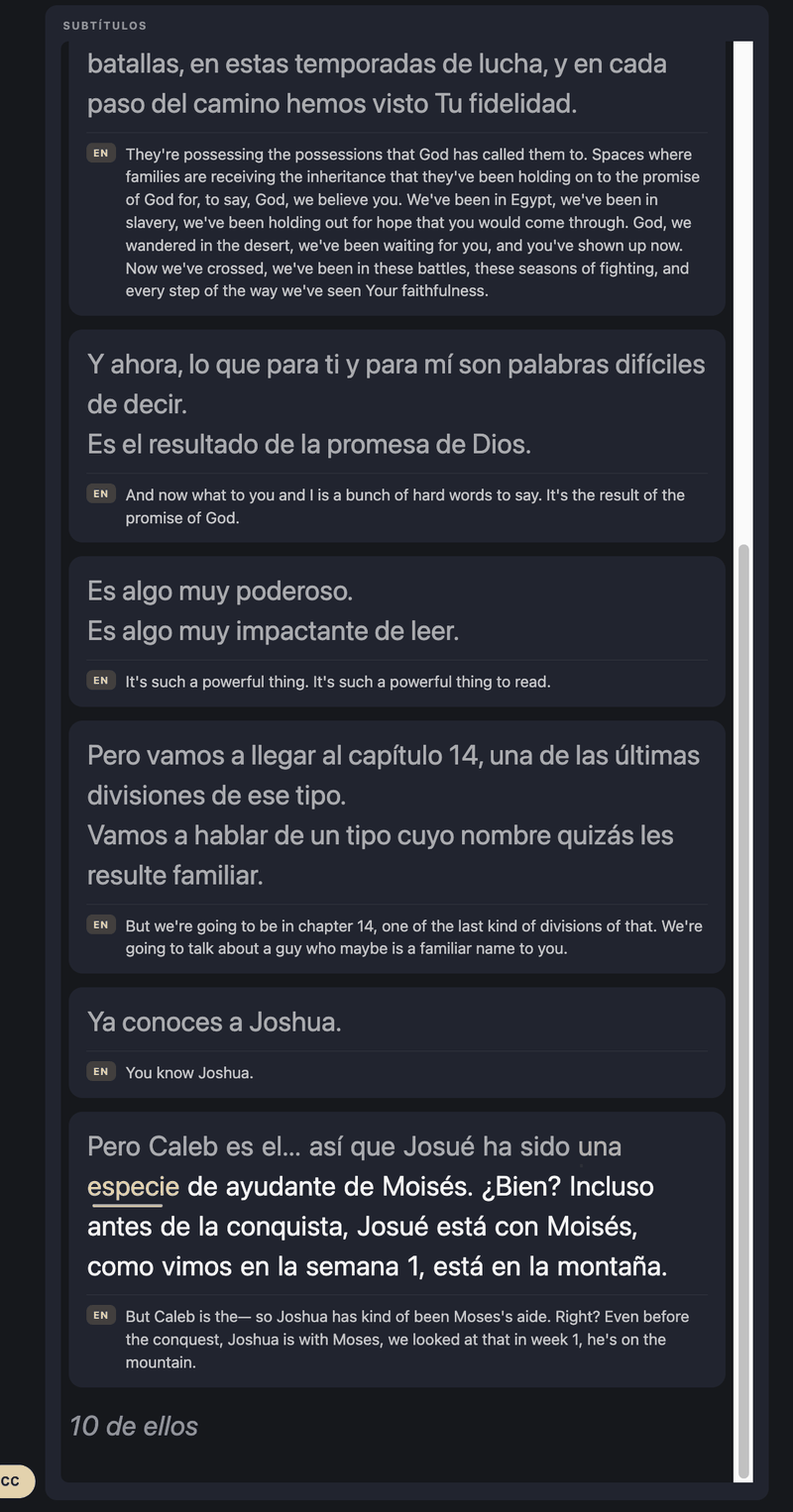
Guests scan a QR code and get live captions in 190+ languages or a natural spoken voice in 60+ — the widest published coverage on this list — with a gold word-by-word highlight that follows the voice. The proprietary MODVOICE engine is built around one integrity rule: it never paraphrases the preacher. Around the sermon itself: announcements rotate on the lobby display in multiple languages at once, decision and connection cards reach every phone in each guest’s own language, and after the service a fully translated Sermon Notes Hub — scriptures, summaries, memorable quotes — builds itself in the languages you pick. Every listener screen carries your church’s name, logo, and colors.
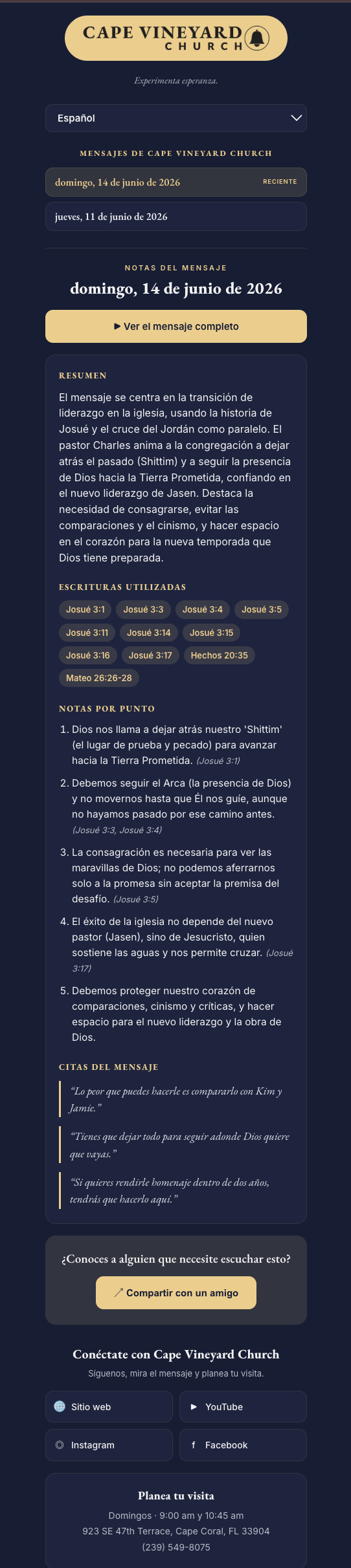
- Languages: 190+ captions, 60+ with natural voice
- Price: $149/month for 6 hours and up to 3 languages — every feature on every plan, $0 setup, 15% nonprofit discount on Starter and Congregation
- Trial: a free weekend of services, no card required
- Weigh this: we’re the newest name on this list, and we’re telling you about ourselves — so verify every cell against our published pricing and run the free trial before you believe us.
2. Wordly — the established event-translation name
Best for: churches that want a widely known vendor and are comfortable getting pricing through a sales conversation.
Wordly is one of the best-known live-translation services for events, and many churches evaluate it first. It publishes 60+ languages, QR or link join with no app download, and transcripts with short summaries after the event. Its public pages describe general event translation rather than church-specific features — no sermon notes, translated announcements, or response cards appear on its site.
- Languages: 60+ (published)
- Price: not published — quote required
- Trial: not listed on their public pages — contact their sales team
3. Glossa — the lowest published entry price
Best for: churches with many service hours and a tight budget.
Glossa publishes full pricing — $99/month for 25 hours, or $5/hour pay-as-you-go — and lists 100+ languages with listen-or-read on any modern browser, unlimited listeners, and transcripts afterward. Some features, including voice cloning and integrations, are listed on its Advanced and Premium tiers rather than the entry plan. If raw hours per dollar is your deciding row, Glossa’s published numbers are the strongest here.
- Languages: 100+ (published)
- Price: $99/month for 25 hours, published in full
- Trial: 4 free hours advertised
4. OneAccord — church-branded basics
Best for: churches that want a simple branded listener experience.
OneAccord lists 50+ languages in written and audio form, QR join in the browser, branded URLs with your church logo, transcript downloads in original and translated languages, no setup fees, and pricing “from $150/month” for 5 hours that scales with users. Beyond the “from” price, full tier details aren’t published — you’ll need to ask for specifics.
- Languages: 50+ (published)
- Price: from $150/month for 5 hours (partial — “from” price only)
- Trial: free credits on request
5. Google Translate — the free DIY option
Best for: hallway conversations and one-on-one ministry — not the service itself.
It’s the app pastors reach for first, and for a two-person conversation it’s genuinely good and completely free. But it isn’t built for a live service: there’s no way to caption one preacher to a whole room of phones, no shared listener page to join by QR code, no church branding, and nothing saved afterward. Churches that try it for the sermon usually end up holding a phone near a speaker and hoping. Keep it installed for pastoral conversations; use a dedicated service for the room.
- Languages: extensive — among the widest of any consumer translation app
- Price: free
- Weigh this: no room-scale broadcast, no listener page, no record of the service
How to choose
Four questions sort this list quickly:
- Which languages does your congregation actually speak? Published counts range from 50+ to 190+. If you have guests outside the usual top twenty languages, check the specific ones before anything else.
- Can you budget without a sales call? Glossa and MyOpenDoor Translate publish full pricing; OneAccord publishes a “from” price; Wordly requires a quote.
- What happens after the benediction? All four dedicated services produce transcripts; only one publishes a fully translated sermon-notes page, translated announcements, and response cards.
- Can you test it on a real Sunday? A demo in a quiet office proves little. Run a real service — the trial terms above tell you which providers make that easy.
Frequently asked questions
Is there an app for translating a church service?
Yes — but the best modern services don’t require your guests to install one. MyOpenDoor Translate, Wordly, Glossa, and OneAccord all run in the phone’s browser: guests scan a QR code, pick a language, and read live captions or listen to a translated voice. No download, no account, no receiver hardware.
Do my guests need to download anything?
With any of the four dedicated services in this list, no. A guest scans a QR code on the seat back or screen, their browser opens the listener page, and they pick their language. The only download-an-app option here is the free DIY route (Google Translate), which works phone-to-phone rather than for a whole room.
What is the best free church translation app?
For a one-on-one hallway conversation, Google Translate’s free conversation mode is genuinely useful. For a live service it falls short: it isn’t built to caption one preacher to a whole room, there’s no shared listener page, and nothing is saved afterward. Among the dedicated services, MyOpenDoor Translate’s free trial covers a weekend of services with no card required, and Glossa advertises 4 free hours.
What is the best app for sermon translation specifically?
Look for features built around preaching rather than generic events: an engine that never paraphrases the preacher, translated sermon notes after the service, and response cards guests can answer in their own language. By each provider’s published pages as of July 2026, MyOpenDoor Translate is the only service in this list that publishes all three.
How much does church translation software cost?
By published prices as of July 2026: Glossa is $99/month for 25 hours, MyOpenDoor Translate is $149/month for 6 hours with every feature included and a 15% nonprofit discount on Starter and Congregation plans, OneAccord starts “from $150/month” for 5 hours, and Wordly requires a quote. See our full cost breakdown in the church translation cost guide.
Every competitor fact on this page is taken from wordly.ai, glossa.live, or oneaccord.ai as published in July 2026 (verified 19 July 2026). Where a provider doesn’t publish something, we say so — that’s a statement about their public pages, not about what they can or can’t do. If anything here has changed, tell us and we’ll correct it.
Related reading: the full feature-by-feature comparison, how much church translation costs, and how to translate a church service in real time.